
"coffee pests and diseases"
600 article(s) found

Strong Java Coffee Flavor description method introduction to the price of high-quality coffee beans
Java produces only a small amount of Arabica beans, most of which were imported from Africa after the rust disaster. This coffee has a strong bitter taste after roasting, but the aroma is extremely light. Although the acidity is low and the taste is delicate, it is rarely used for direct drinking. It is often used to mix mixed coffee or to make instant coffee. Diseases and insect pests are really a powerful thing, it makes Pakistan

What are the three major coffee varieties in the world? what is the flavor and taste of Liberian coffee?
Professional coffee knowledge exchange more coffee bean information please follow the coffee workshop (Wechat official account cafe_style) according to botany or coffee bean species to classify, in fact, there are more than 60 kinds of coffee! There are also 25 artificially selected and cultivated species, but only a few of them are available for commercial use, and these three are known as Liberia (big fruit), Robusta (middle fruit) and

Basic knowledge about coffee trees
Breed of coffee: When you taste single-origin coffee, you will see some information about the variety in addition to the country of origin, production area and geographical and climatic conditions. Arabica, Robosta, Bourbon, etc. For coffee flavor, of course, the difference in the production area is relatively large. When it comes to different varieties of beans produced in the same locality, the differences between varieties change.

The most classic high-quality Arabica variety of tin coffee flavor introduction
Catimor: Catimor is not purely Arabica, it is a hybrid of Timor species (belonging to Robusta species) and caturra(a variant of Popan species), so catimor has 25% Robusta lineage, and its Robusta lineage also determines its taste defects: aroma is not rich enough, and the overall taste is bitter, prone to astringent and pungent
Introduction of Coffee Encyclopedia Coffee
The kind of coffee [preface]: when tasting individual coffee, you will see some information about the variety in addition to the producing country, producing area, geographical and climatic conditions. Such as Arabica, Robusta, Bourbon and so on. As far as the flavor of coffee is concerned, the difference in producing areas certainly has a greater impact on the flavor of coffee. When it comes to different varieties of beans produced in the same place, the differences between varieties change.

The planting conditions of coffee trees the types of coffee trees
The Robastian coffee tree, which originated in the Congo in Africa, accounts for about 20% of the world's production. 30%. Robasta coffee tree is suitable for planting in the lowlands below 500 meters above sea level, has strong adaptability to the environment, can resist bad climate, resist diseases and insect pests, and does not need much manual care during soil preparation, weeding and pruning, and can be allowed to grow in the wild. It is easy to cultivate.

The proportion of coffee powder to water in the variety of fine coffee.
Produced in Brazil and is a hybrid of Bourbon and Sumatra. Strong environmental adaptability, resistance to diseases and insect pests, high yield. Trees up to more than three meters high should not be harvested, the taste is more balanced, the taste is close to the traditional varieties. Catuai Carduwey is an excellent variety, which is suitable for the severe climate at high altitude and has high yield. it was first produced in Brazil and is a hybrid of caturra and mondu nove.

The relationship between coffee bean quality and altitude, the relationship between air temperature, and the harm of climate change to coffee trees.
Professional coffee knowledge exchange more coffee bean information please follow the coffee workshop (Wechat official account cafe_style) altitude: a symbol of coffee quality? Higher altitude is often associated with better sweetness and more complex coffee flavor; to be exact, there is a correlation between the two, but not causality. To a large extent, the factors that affect the quality of coffee

Yemeni farmers abandon coffee
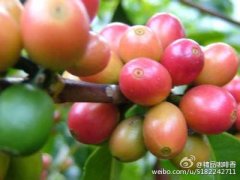
Experts point out that if the trend of farmers abandoning coffee and planting Carter grass is not improved, Yemeni coffee will have no tomorrow. Experts concluded that the reasons for the disadvantages of coffee crops are as follows: drought and water shortage, lack of advanced irrigation systems, increased planting costs, serious diseases and insect pests, cheaper imported coffee and better profits than coffee. It seems that the problem is very complicated. It may be difficult to increase coffee production in Yemen in a short period of time.
Yemeni farmers abandon coffee
Experts point out that if the trend of farmers abandoning coffee and planting Carter grass is not improved, Yemeni coffee will have no tomorrow. Experts concluded that the reasons for the disadvantages of coffee crops are as follows: drought and water shortage, lack of advanced irrigation systems, increased planting costs, serious diseases and insect pests, cheaper imported coffee and better profits than coffee. It seems that the problem is very complicated. It may be difficult to increase coffee production in Yemen in a short period of time.

Flavor description of Yunnan Tieka Coffee Bean introduction to the characteristics of varieties produced in the manor area
The so-called new variety of Yunnan Tieka coffee beans actually refers to catimor (Katimo), which is a hybrid of timor and Arabica from the Roberta family. Compared with the old varieties, it lacks rich aroma and taste, and has a relatively shallow smell of grass and soil, but it has the advantages of resistance to diseases and insect pests, easy to manage, high yield and the highest yield per mu can reach 350kg.

The coffee producing area of Tanzania
Due to political instability and rampant diseases and insect pests, the coffee industry in Tanzania has been damaged, leading to a decline in the overall level of coffee and instability in quality, which in turn lead to lower prices, which are usually the result of a further decline in the coffee industry. What's more, it is estimated that more than 12% of the Arabica coffee grown in northern Tanzania from 1969 to 1985 was smuggled.

Coffee varieties Arabica Coffee varieties Abstract what are the main varieties of fine coffee
Coffee can be divided into three main varieties, namely, Arabica (Coffea arabica), Robusta Coffea canephora (Robusta) and Liberia (Coffea liberica). Arabica is the main force of boutique coffee, suitable for growing at higher elevations, tastes better, is more delicate, needs care, and is the smallest of the three, so it is also known as

Some common nouns explain the basics of coffee.
[foreword]: when tasting individual coffee, you will see some information about the varieties in addition to the producing country, producing area, geographical and climatic conditions. Such as Arabica, Robusta, Bourbon and so on. As far as the flavor of coffee is concerned, the difference in producing areas certainly has a greater impact on the flavor of coffee. When it comes to different varieties of beans produced in the same place, the differences between varieties become intentional.

What are the differences between Arabica and Robusta coffee varieties
The most common kind of coffee we have on the market is two kinds of Arabica Calabasta, and they are actually two tree species, that is, coffee trees. Let's first take a look at the difference between these two kinds of coffee. Alabica (CoffeaArabica) Robusta (CoffeaRobusta) planting conditions are higher (600 to 2000 meters above sea level), poor resistance to diseases and insect pests, vulnerable to damage.
About the characteristics and uses of robusta beans-not all robusta beans are shoddy beans
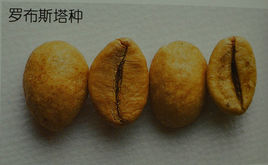
[introduction] "Robusta" coffee is commonly known as "sturdy beans". It can be planted at low elevations (200 to 800 meters above sea level). It has strong resistance to diseases and insect pests and is not vulnerable to agricultural diseases. the annual output of coffee trees per unit area is higher, and it is harvested in large quantities by machine. generally speaking, the production cost is much lower than that of Ala "Robusta" coffee, commonly known as "sturdy beans", low altitude areas (elevation 200 to 800)

Fine coffee varieties Arabica species and Robusta species
As a crop, tree species and planting environment are the basic factors for the good circulation of coffee beans. At present, the coffee beans in circulation in the coffee market are Arabica (Coffea Arabica) or Robusta (Coffea Robusta). Generally speaking, Arabica coffee trees have fragile vitality, low resistance to diseases and insect pests, and high requirements for planting environment.

Three primary coffee beans
Arabica: Origin of Ethiopia, equivalent to the rich and handsome coffee beans, belong to the precious coffee beans. It is grown at an altitude of 700-2000 meters and accounts for 75-80% of the world's coffee production. It has excellent flavor and aroma, low caffeine content, caffeine content of about 1-1.5% of its weight, but for drying, frost, disease
How to correctly identify robusta coffee beans and correctly understand their characteristics, uses and benefits
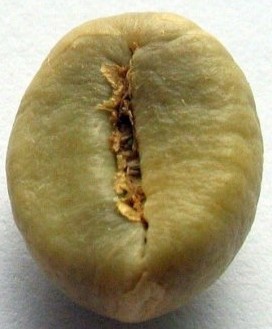
[introduction] "Robusta" coffee is commonly known as "sturdy beans". It can be planted at low elevations (200 to 800 meters above sea level). It has strong resistance to diseases and insect pests and is not vulnerable to agricultural diseases. the annual output of coffee trees per unit area is higher, and it is harvested in large quantities by machine. generally speaking, the production cost is much lower than that of Ala "Robusta" coffee, commonly known as "sturdy beans", low altitude areas (elevation 200 to 800)

Special Topics on Bourbon variants | introduction by Pacamara, Kaddura, Kaduai and Sachimo
In the process of coffee growth, there are many challenges, such as moisture, frost, diseases and insect pests, among which leaf rust is the most harmful. Natural things evolve under natural selection, and so do coffee trees. there are many varieties of coffee in the coffee world, either naturally mutated or artificially cultivated. We wrote an introduction to bourbon species before, and this time we